
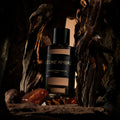

How to Find Your Signature Scent: A Practical Guide

You find a signature scent by working from how you want to feel, narrowing to one or two fragrance families, and then wearing a few candidates on your skin for a full day each. Smelling dozens of bottles in a store won’t do it. The scent you want is the one you still like at hour six, when the opening sparkle has gone and the base is all that’s left.
This guide walks through that process step by step. It covers what a signature scent is, how to choose a starting point, how to test fairly, and what to look for if you’re shopping for a man or for a woman.
TL;DR
- Start with a feeling (confident, calm, energized), not a list of notes. Then match it to a fragrance family.
- Test on skin, not paper. Skin chemistry changes how a fragrance develops, and the dry-down is where the true character shows.
- Wear one candidate per day, take a one-line note at the first hour, the fourth hour and the evening, and let your nose reset in between.
- A signature scent can be a single perfume or a small, consistent profile. You don’t need to commit to one bottle forever.
- Pick something that works across seasons and settings, then shop within that family to compare strengths and sizes.
Table of Contents
- What a signature scent actually is
- Step 1: Start with a feeling, not a note list
- Step 2: Pick a fragrance family
- Step 3: Understand strengths before you compare
- Step 4: Test on skin and judge the dry-down
- Step 5: Stress-test it against your real life
- Signature scent ideas by style
- Common mistakes that cost people money
- Our perspective on finding a signature scent
- Put your shortlist to work
- FAQ
- Sources
What a signature scent actually is
A signature scent is a fragrance people connect with you. It should feel like an extension of your personality rather than a costume. One perfumer quoted by Refinery29 describes it as a statement of who you are, whatever the season or occasion.
That doesn’t mean one bottle for life. A FemFragLab discussion that ranks on Google for this query frames it as more of a scent profile than a single perfume, and plenty of experienced wearers agree. You might settle on a woody, slightly sweet profile and own three perfumes within it: a lighter one for summer, a richer one for winter, a soft one for the office.
The practical definition we use: a signature scent is something you reach for without thinking, that you’d be happy to be remembered by, and that doesn’t feel wrong in any room you regularly walk into.
Step 1: Start with a feeling, not a note list
Long lists of bergamot, oud and tonka are a poor starting point if you’ve never studied perfume. Experts interviewed by The New York Times suggest beginning with emotions or memories. Refinery29’s expert makes the same point: if “Who am I?” is too big a question, begin with an emotion.
Try this in ten minutes with a pen:
- Write three words for how you want to feel when you wear it (for example: composed, warm, awake).
- Write two or three smells you already love that aren’t perfume: fresh laundry, a cedar drawer, orange peel, a bakery, rain on pavement.
- Write one smell you avoid. This is just as informative.
You now have a brief. “Awake” and “orange peel” point toward citrus. “Warm” and “bakery” point toward vanilla and amber. “Composed” and “cedar drawer” point toward woods.
Step 2: Pick a fragrance family
Families are the shortcut that makes the huge range of perfumes manageable. The Fragrance Foundation France teaches the main families, and its framework is a sensible starting structure for beginners. Choosing by family tends to work better than starting with individual notes, which can overwhelm you.
Here is a plain-language map, with the feelings each family tends to suit:
| Family | Typical notes | Often suits the feeling of |
|---|---|---|
| Fresh (citrus, green) | Lemon, bergamot, grapefruit, cut grass | Energized, clean, open |
| Floral | Rose, jasmine, peony | Romantic, polished, soft |
| Fruity | Pear, peach, berries | Playful, bright, easy |
| Woody | Sandalwood, cedar, vetiver | Grounded, composed, confident |
| Warm and sweet | Vanilla, amber, tonka | Comforted, cozy, sensual |
| Aromatic | Lavender, sage, herbs | Calm, crisp, classic |
Most people lean toward one or two columns. If you’re torn, a hybrid is fine: woody-floral, fresh-aromatic, amber-vanilla. Many of the best signature scents sit across a boundary.
Step 3: Understand strengths before you compare
Two fragrances in the same family can behave very differently depending on concentration. According to Forbes, an eau de toilette contains roughly 5 to 15 percent aromatic compounds and suits light daywear. Eau de parfum sits above that and generally lasts longer.
When you browse, you’ll see these abbreviations in product names, such as EDT for eau de toilette, EDP for eau de parfum, and Parfum for the richest format, as in this 100 ml Parfum. Treat them as a guide to intensity, not a guarantee of quality. A well-built EDT can be a better everyday signature than a heavy EDP you only enjoy in January.

Step 4: Test on skin and judge the dry-down
This is the step most people skip, and it’s why they end up with a bottle they regret.
Why paper blotters mislead
Because skin pH and temperature affect how a fragrance develops, a paper strip gives only a surface impression. Experts cited by Refinery29 warn that blotters fail to show the base notes that emerge in the dry-down, the stage that defines how the scent really smells on you.
Why your skin matters
Skin is not a neutral canvas. Older trade research published in Perfumer & Flavorist reports that high sebum content can extend how long lipophilic top notes stay detectable by one to two hours, while application on apocrine-rich areas can speed up top-note fade by 30 to 50 percent. A 2018 study in the journal Cosmetics analyzed the volatile compounds from human skin that make up individual body odor, and noted that understanding how a fragrance modulates that odor matters for perfume design. Forbes cites research suggesting individual body odor remains identifiable through applied fragrance in 60 percent of cases. In plain terms: the same perfume can smell sweeter, sharper or fainter on you than on your friend.
A simple one-week test protocol
- Choose two or three candidates, no more. Your nose tires fast.
- On day one, spray one fragrance on a clean inner wrist or the side of the neck. Don’t layer other scented products.
- Note your impression at the first 15 minutes, the fourth hour and the evening. Write one line each time.
- Skip a day so your nose resets, then try the next candidate.
- After the round, ask three questions: Did I still like it at hour six? Did I forget I was wearing it in a good way? Did anyone react without prompting?
If you can’t get samples or testers, buy smaller sizes first where they’re offered, and judge by the same protocol before committing to a large bottle.
Step 5: Stress-test it against your real life
A signature scent has to survive your calendar. Before you commit, wear your front-runner in at least three situations: a workday, a casual weekend, and an evening out. Then try it in a different season if you can.
Watch for these warning signs:
- It gives you a headache or feels cloying after a few hours. Try a lighter concentration in the same family.
- You love it for twenty minutes and then lose interest. The top notes won, the base lost. Look for something with a base you enjoy.
- It disappears too quickly. Consider a stronger concentration, or apply to moisturized skin, which tends to hold scent a bit better.
- It only works in one season. That’s a great second fragrance, not a signature.

Signature scent ideas by style
We’re not going to hand you a universal top ten, because that’s the opposite of the point. What follows are directions, based on the families above, that tend to hold up year-round.
Signature scent for men
Men’s signatures often work best when they’re versatile: woods, light musks, amber and aromatic or fougère-leaning blends. A men’s fragrance reviewer at Blueprint argues that a signature should wear well at work, on weekends and on date night, and recommends notes like woods, patchouli, amber and light musks. Be a little conservative: a scent that’s too niche or too loud limits where you can wear it.
If you want to explore this style, start in our men’s collection and filter by woody or fresh families. Fragrances such as Wild Journey and Once Opon Traveller are good places to read the notes and see how they fit your brief.
Signature scent for women
Women’s signatures span the whole map, from clean florals to deep amber. The useful question is not “floral or not,” but how bold you want to be. A soft floral like rose and silk reads quiet and polished. A spicier, warmer composition reads confident and memorable.
Browse the women’s collection with your family shortlist in mind. Examples to look at include Fleur de Soie, Rouge Avenue and What Is Beautiful. We mention them as places to start your own testing, not as a verdict on what suits you.
If you don’t want a gendered label
Many people ignore the men’s and women’s labels entirely. Marketing categories are loose, and a fresh woody scent can be worn by anyone. Use the filters for scent family and notes, then read both collections.
Common mistakes that cost people money
- Buying from the first spray. The opening is the least representative part of any perfume.
- Testing six scents in one sitting. After three, your nose can’t tell them apart.
- Copying someone else’s signature. It’s tempting, but the scent that suits your friend is built on their skin and their personality. Use it as a clue to a family, not as a target.
- Choosing by the bottle or the brand story. Judge the liquid.
- Expecting perfume to mask you. It interacts with your own skin. Pick something that works with you, not against you.
Our perspective on finding a signature scent
Our view at Fragrify comes from how people actually shop for fragrance online. Most of the people who arrive are not stuck on a lack of choice. They’re stuck on too much of it. Thousands of bottles, unfamiliar note names, and no way to smell through a screen.
So we think the job of a good fragrance shop is to shrink the problem. That’s why our catalog can be browsed by scent family, by top, heart and base notes, by concentration, by size, by budget and by brand, and why you can compare options side by side. Start from the family you identified in Step 2, then narrow by concentration and budget, and you’ll go from a thousand options to a handful of real candidates in a few minutes.

We also believe a signature scent shouldn’t require a luxury budget. Affordability is part of how we curate, because a fragrance you can afford to wear generously, and replace without anxiety, is more likely to become a signature than one you save for special occasions.
And we’d say this plainly: take your time. A signature is something you grow into over a few weeks of wearing, not a one-click decision.
— Eimantas
Put your shortlist to work
Once you have a family and a feeling, the quickest way to turn them into candidates is to filter the full Fragrify catalog by scent family, notes, concentration and budget. If you prefer to start narrower, go straight to the women’s or men’s collections. Pick two or three, and run the one-week test from Step 4.
FAQ
How long does it take to find a signature scent?
For most people, a few weeks. The time goes into wearing each candidate for a full day, not into browsing. Three well-chosen fragrances tested properly beat twenty sniffed in a store.
Can I have more than one signature scent?
Yes. Many experienced wearers treat a signature as a profile, such as woody and warm, and keep a few fragrances within it for different seasons. What matters is that people come to associate that overall character with you.
Should I choose by notes or by fragrance family?
Start with the family. Families give you a manageable structure, while individual note lists can be overwhelming at first. Once you know the family you like, notes help you fine-tune within it, for example choosing sandalwood over cedar.
Does the same perfume smell different on different people?
Yes. Skin hydration, pH and sebum levels all influence how a fragrance develops and how long its top notes last, according to trade research in Perfumer & Flavorist. That’s why testing on your own skin matters more than reviews.
Is a signature scent for men different from one for women?
Not in any rule-bound way. The categories are a marketing convention, and what matters is the family, the concentration and how it wears on you. Browse both collections if something in the other one fits your brief.
Sources
- Expert Tips On How To Find Your Signature Scent, Refinery29
- How to Find Your Signature Scent, The New York Times
- Les 7 familles de parfum, The Fragrance Foundation France
- Discover The Luxury Fragrances That Match Your Body Chemistry, Forbes
- Skin Odor Value Technology for Fragrance Performance Optimization, Perfumer & Flavorist
- Headspace SPME GC-MS Analysis of Scent Profiles from Human Skin, Cosmetics
- The 10 Best Signature Scents for Men, Blueprint
- r/FemFragLab on Reddit
Recommended

Rollerball vs Spray Perfume: Which Should You Wear?
Rollerball or spray perfume? Compare projection, longevity, travel rules, mess and cost, and find the format that fits your day, your skin and your suitcase.

Fresh Clean Perfumes: How to Find a Scent That Smells Just Showered
What makes a perfume smell fresh and clean, which notes to look for, how to test and wear them, and how to shop the style by filters, not...

Designer vs Niche Perfumes: What Actually Separates Them
Designer vs niche perfumes explained: who makes them, how prices and quality differ, which brands fall where, and how to pick the right one for you.